
What happens at work follows us home. It shows up in how we think, how we feel, how we speak to the people closest to us, and how much of ourselves we have left at the end of the day.
On April 28, two global days are recognized, each carrying a distinct yet deeply connected purpose. The National Day of Mourning asks us to remember those who have lost their lives, been injured, or become ill because of work. World Day for Safety and Health at Work asks us to look forward, to strengthen prevention, and to improve the conditions in which people work.
In today’s workplaces, where values such as Zero Harm and commitments that everyone goes home safe and well are clearly stated, a tragedy or accident does not remain isolated. It impacts everyone. For those closest to the individual, it can alter life in ways that cannot be reversed. For others, it leaves a quiet but persistent question, “what if that were me?”, creating an undercurrent of fear that continues to operate in the background of their daily work.
From corporate offices to front lines and sites, the conversations that impact me the most are when someone feels safe enough to share what work is costing them beyond the workplace.
I have sat with leaders and frontline workers who speak about exhaustion that does not lift, and how it takes away quality time and intimacy with their spouse, their ability to be present for what matters to their children, or leaves them with a sense of losing themselves and working without knowing their purpose. From disrupted sleep, strained relationships, and a constant sense of trying to keep up with something that never slows down, these are stories I hear consistently across industries, roles, and levels of leadership. They are deeply human.
I believe that the Day of Mourning represents reflection, and World Day for Safety and Health at Work represents responsibility. Together, they ask something more of us than acknowledgement. They ask us to consider how we got here, and what we are prepared to change.
Because the reality is this: the experiences people are carrying today were not created by a single decision, a single leader, or a single organization. They are the result of how work has been designed over time. Systems that prioritized output, efficiency, and growth, often without fully understanding the cumulative impact on the human being required to sustain them.
I believe it is important to remove blame and accept that we may have arrived here by default.
It has taken time to recognize and defend the fundamental needs of a human being in the workplace. We are not bound by where we are today, nor are we designed to stay here. With each passing year, we are seeing the global landscape shift toward prevention within systems, rather than supporting the individual alone and making it a people problem.
The International Labour Organization’s 2026 global report, The psychosocial working environment: Global developments and pathways for action, examines how the psychosocial working environment is shaped by how work is designed, organized, managed, and governed through policies, practices, and procedures.
Work-related psychosocial risks are now associated with more than 840,000 deaths each year, alongside nearly 45 million years of healthy life lost, and measurable impacts on global economic performance. These figures represent the accumulated effect of how work is experienced every day.
It is the workload someone carries. The clarity, or lack of clarity, in what is expected. The pace at which work must be performed. The level of control a person has over how they do their job. The way performance is measured, rewarded, and communicated.
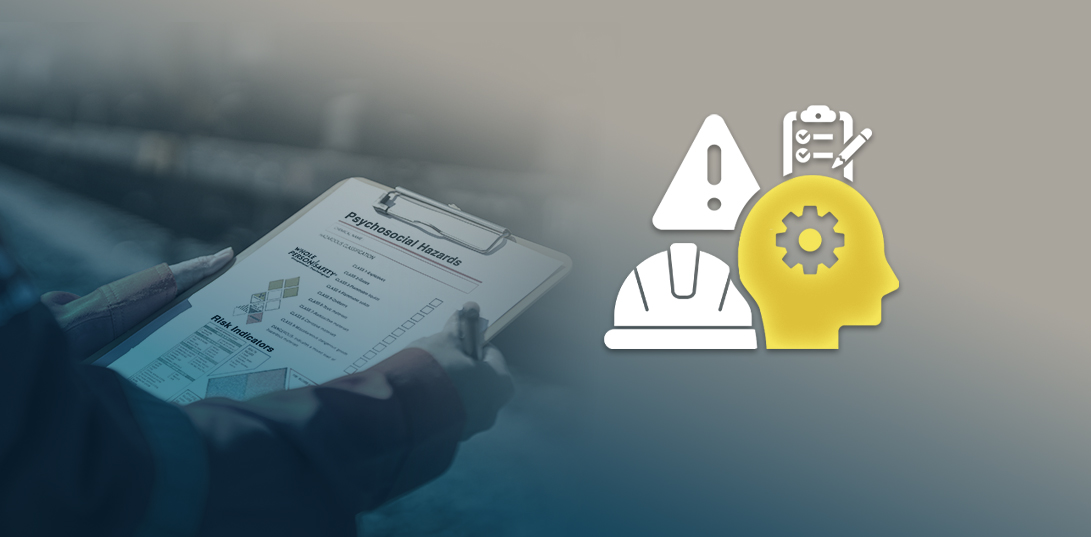
So how does this impact human safety? How is whole-person protection honored? For many years, workplace safety has evolved through a clear and necessary progression. There was a time when physical hazards were accepted as part of the job. Exposure to toxic substances, unsafe equipment, and dangerous conditions were normalized, until they were not. Through regulation, innovation, and leadership, those hazards were identified, controlled, and, where possible, removed. We are now standing at a similar point, except the hazards we are being asked to address are less visible, but no less real.
They exist in workload that exceeds human capacity, in environments where expectations are unclear or constantly shifting, in systems that unintentionally create imbalance between effort and reward, and in ways of working that erode cognitive and emotional capacity over time.
The ILO highlights that long working hours remain widespread, and that exposure to workplace violence and psychological harm continues to affect a substantial number of workers.
As someone who has built an organization and a global team through our Whole-Person Safety system, I am hopeful that we are not far from seeing a paradigm shift in the way we work, where human cognitive capacity is treated with the same importance as eating and sleeping.
What we are beginning to understand, at a much deeper level, is that supporting people after harm has occurred is not the same as preventing harm from being created.
For many years, the conversation has centered on support and access to resources, programs, and services that help individuals manage the demands placed upon them. This work is important, and it must continue. But it is no longer sufficient on its own. What is emerging now is a shift in perspective, from support to responsibility. From asking how individuals cope, to asking how work is designed in the first place.
This is where meaningful change begins, not by assigning blame, but by recognizing that the systems we have inherited can be redesigned. Leadership today has access to evidence, tools, and understanding that did not exist at this level before, and with that understanding comes the opportunity to do something different.
To design work in a way that aligns demand with human capacity, to create clarity where ambiguity has been normalized, to ensure that autonomy, support, and structure are intentionally built into how work is performed, and to integrate psychological and cognitive health into the same level of governance that physical safety now holds.
This is not about lowering standards or reducing performance. It is about sustaining it, because performance that comes at the cost of the human being is not a price any of us should accept or be part of.
On this day, remembrance matters. It grounds us in the reality that work has consequences when systems are not aligned with human safety. But remembrance, on its own, is not the outcome.
The outcome is what we choose to do because of it. The people we remember today, and those who are still carrying the weight of their work, are connected by the same truth.
Work should not cost a person their health, their relationships, or their sense of self.
It never needed to, and moving forward, it does not have to.