

Why Your Psychosocial Risk Interventions Keep Starting Over and WHY Certifying Your Management Team Changes That
Article Written by Dr. Marvin Thompson and Dr. Deborah Tolulope Jesusolu-Enioluwafe
A few years ago, I sat with a leadership team that had done everything right, on paper. They were conducting an autopsy on their efforts to improve efficiencies and outputs. What started as a discussion turned into a debate. Nobody was injured or harmed, however, three different camps emerged with no resolution.
Six months later, they were describing the same patterns they had before they started. Same crews underperforming. Same turnover they couldn’t explain. Same supervisors burning through people, or people burning through supervisors.
Their first instinct was to question the program. Find a better one. Try again. The program wasn’t the problem. The sequencing was, and nobody in the building had the capability to see that.
When You Do Everything at Once, Nothing Gets Fixed
There is a failure pattern in psychosocial risk management that I recognize the moment I hear it. It happens when an organization tries to address all its risk conditions simultaneously instead of identifying and controlling the one condition generating the most harm. This applies to almost any work environment.
What you get is diluted effort across too many fronts. No single condition gets controlled well enough to produce a measurable outcome. Leaders get fatigued. The initiative loses momentum. And because nothing measurably improved, the organization concludes that the approach doesn’t work. The approach didn’t fail. The sequence did.
This isn’t a motivation problem. It isn’t a commitment problem. It is a sequencing problem. Sequencing problems have solutions. But solving them requires managers who have been trained to see the system behind the symptom, not just respond to the one in front of them.
The Logic That Physical Safety Already Figured Out
In physical safety, we understand intuitively that not all controls are equal. Eliminating a hazard at the source is more durable than training someone to work around it. The hierarchy of controls isn’t a suggestion. It is the logic that determines which interventions hold and which ones need constant reinforcement.
The same logic applies to psychosocial hazards. Completely. Yet most organizations in mining and construction are applying individual-level responses to what are fundamentally system-level conditions.

Here is where most organizations are operating, and where the highest-value controls sit:

Individual interventions are the most commonly deployed responses precisely because they require the least organizational change. They also sit at the bottom of the hierarchy. Most accessible. Least durable.
That’s not a criticism of those tools. It’s a statement about where they belong in the sequence. They are not prevention. They are response. And when you lead with response instead of prevention, you manage the same problem on a loop. What you’re looking for isn’t a better program. It’s a better starting point.
What’s Actually Happening to Your People
Here is something most psychosocial risk programs don’t tell you. When workers disengage, resist change, or underperform after a restructuring, they are frequently not being difficult. They are neurologically protecting themselves from an environment their brain has assessed as unsafe.
Psychosocial stressors, including workload, role ambiguity, inconsistent leadership, and poor change management, trigger measurable neurochemical responses. Cortisol rises under chronic demand. Dopamine deteriorates on the pathways that drive motivation and reward under sustained threat. Oxytocin, the neurochemical that enables trust and team cohesion, is suppressed in environments where exclusion and unpredictability are the norm.
The result is not a morale problem. It is a cognitive one. Research confirms that acute psychosocial stress impairs verbal recall, attention, and working memory, with prolonged abnormalities persisting after the stressor. For any operation that depends on checklists, handovers, inspections, or safety-critical decisions, that is not a human resources issue. That is an operational risk.
Most supervisors have never been taught to read these signals. They see the behavior; they don’t see the system condition generating it. That gap is where preventable harm compounds.
Five Conditions. One Primary Driver.
Psychosocial hazards in mining and construction operations tend to cluster around five work-design conditions. Read each card against your operation and mark which signals apply. The condition with the most matches is your starting point.

Controlling the primary condition typically reduces exposure across the others; most of the five share upstream drivers in how work is designed and supervised. Fix the root, and you move the needle on several problems at once.
The discipline isn’t in addressing all five. It’s in correctly identifying which one is generating the most preventable loss in your operation right now. Most organizations skip that diagnostic entirely and go straight to intervention. That’s the sequencing error. And it’s why the fix doesn’t hold.
What Happens When You Get the Sequence Right
A peer-reviewed longitudinal study published in Safety Science in 2024 tested exactly this approach. Manager-led training. Multiple management levels trained together. The research team didn’t ask managers to fix everything; they asked teams to collaboratively prioritize two or three risks, not the whole list.
THE RESULTS
✓ Organizational safety climate improved significantly within 6 months
✓ Improvements remained higher than the control group at 18 months
✓ Role clarity and change management showed significant gains at both measurement points
✕ Untrained teams in the same organization saw conditions deteriorate over the same period
Three hours of structured training. Managers leading the process in their own teams. No external consultant dependency required to sustain the results.
That outcome isn’t accidental. It’s what happens when you identify the primary condition first, sequence the intervention correctly, and build the capability inside the organization rather than importing it from outside. That is the model the PHPM Certification is built on.
The control group didn’t stay flat. Their conditions deteriorated. Peer support declined significantly by eighteen months.
Inaction isn’t neutral. It has a measurable cost.
What Makes Controls Hold Over Time
So what made those results hold at 18 months when most interventions don’t make it past six? Three things, and they apply whether you are running a 90-day roadmap or any sustained improvement effort.
Documentation
A written record of what was identified, implemented, who owns it, and how it is monitored. Under Canadian OHS legislation, this is also your due diligence evidence. If it isn’t written down, it didn’t happen.
Ownership
Controls assigned to a role, not a person. When the person leaves, the control stays because the accountability is structural. Most organizations assign to people; then the people leave, and the control leaves with them.
Cadence
Monthly pulse data. Quarterly leadership review. Annual reassessment aligned with your OHS management cycle. Without a rhythm, monitoring becomes reactive.
Get those three right, and the 90 days builds something that compounds. Get them wrong, and you are back at the beginning in a year.
The organizations that sustain results are not the ones with the best programs. They are the ones where managers at every level have been trained to see the system, lead the diagnostic, and own the control. That is a capability question, not a program question.
What the PHPM Certification Builds Inside Your Organization
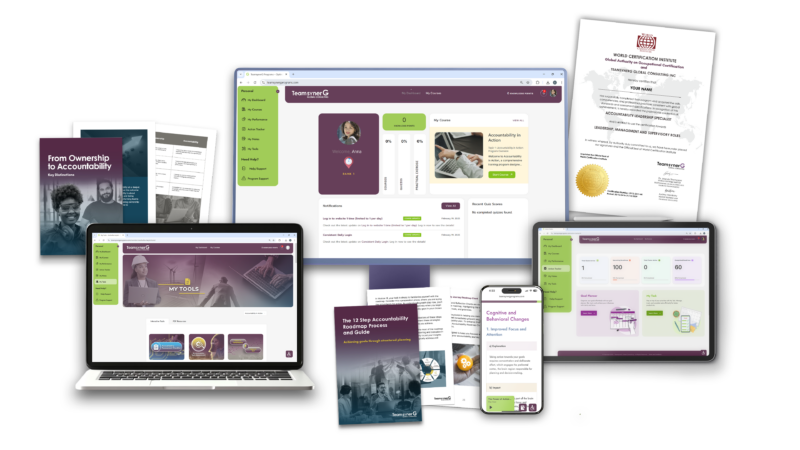
The Psychosocial Hazard Prevention Management Certification (PHPM) was designed specifically for management teams in complex, people-intensive operations. Supervisors, middle managers, and department heads certified together, so the system holds at every level.
The certification does something no external consultant engagement can: it leaves the capability inside your organization permanently. Your managers learn to identify the system condition generating the most risk, conduct structured diagnostics using behavioral indicators and real operational data, design controls that fit your context, and lead the communication that makes those controls stick.
What makes it different from other psychosocial risk training: it is the only program that integrates occupational health science, behavioral neuroscience, systems design, and accountability-based leadership into a single certification. Your managers don’t just learn what psychosocial hazards are. They learn why workers neurologically protect themselves from unsafe environments, how to read those signals in real time, and how to redesign the work conditions generating them.
The capstone is a fully developed Psychosocial Hazard Prevention Blueprint built from your organization’s own data. Participants don’t leave with a certificate and a binder. They leave with a working plan, reviewed and ready for implementation.
The certification is aligned to leading international standards: ISO 45003, CSA Z1003, Safe Work Australia codes of practice, and WHO guidelines on mental health at work. In jurisdictions where psychosocial hazard compliance is now legislated, this is not optional professional development. It is operational readiness.
One Question Before Your Next Intervention
Before you decide what to do next, ask yourself this:
Which of the five system conditions keeps returning in my operation, regardless of what we’ve done to address it at the individual level?
Not the loudest one. Not the one that most recently produced a formal complaint. The one that keeps coming back.
That’s your starting point. And the more important question is whether anyone in your management team is currently equipped to lead what comes next: the structured diagnostic, the control design, the communication, the documentation, the cadence.
If the answer is no, the next intervention will go the same way as the last one. The PHPM Certification is how that changes.
Structure a cohort for your organization
Talk to us about building this capability across your management team: supervisors, middle managers, and department heads, certified together.
About the Authors
Dr. Marvin Thompson, Ed.D.
PRESIDENT, TEAMSYNERG GLOBAL CONSULTING
His work focuses on psychosocial hazard prevention, leadership execution, and policy-aligned operating systems in complex, people-intensive environments including mining, construction, healthcare, and education. He is the co-developer of the Whole Person Safety® framework.
Dr. Deborah Tolulope Jesusolu-Enioluwafe, Ph.D.
CHIEF RESEARCHER & DATA ANALYST, TEAMSYNERG GLOBAL CONSULTING
She leads the firm’s research and evidence strategy. Her work spans applied research design, data analysis, framework development, and knowledge translation. She is a contributing researcher on the Whole Person Safety® framework.