

From Mindset Shift to Measurable Action:
Accountability in Action
Accountability in Action
Transforming awareness into action-disciplined, measurable leadership behaviors.
From Insight to Implentation
Continue your 40-Day Cognitive Reset journey from Day 22–40. This phase moves beyond mindset and into implementation, where clarity becomes responsibility, and responsibility becomes consistent action.
Day 1: WHAT IF?
Big announcements are coming before the end of the year.
The kind of announcements that, once shared, leave no room for turning back. GULP!
As I write this, I already feel the hot flash coming on and it is not from menopause. LOL
In the last 6 months, my brain has been on overdrive. Regardless of how much training and coaching I do for executives and high performers, it is never easy to mitigate the disempowering dialogue I have with me, myself and I!
Like most humans, my “What If Machine” has been relentlessly trying to sabotage my next steps.
What if I am wrong? What if I cannot deliver the vision? What if people are not ready? What if I fail and fail publicly? And the familiar blah, blah, blah of fear dressed up as logic.
A few weeks ago, I was watching Mel Robbins interview author, screenwriter and producer, Shonda Rhimes. She shared how she committed to saying yes to everything that scared her for one full year. As she said that, my brain and body all at once jolted. I said out loud, “crap!” In that moment, I knew instantly that what I had been going through is my own fear of sharing the next chapter of the future for myself and TeamsynerG Global Consulting. This came on with such a force, and I have been sitting in the impact of it since. So, THIS IS IT, I am holding myself accountable to not be taken out by my WHAT IF MACHINE!
“What If” has been poking at me more this year than at any other time in my life. I am 55, I have been in business for 36 years. I have failed far more than I have succeeded and yet, I am always pulled toward big visions with BIG FAITH! On December 27, 2024, I had major surgery and that recovery forced me to restructure my life, say no more often, build stronger boundaries, and reorder my priorities. It also amplified every doubt, betrayal, failure, regret, and fear. This is the battlefield leaders rarely talk about. The internal fight between all the versions of yourself and the dreams you build.
So, as Simone Vitellaro and I prepare for the IGNITE Workshop on January 10th, I have made a commitment to myself. For the next 40 days, until our event, I am doing a cognitive detox and reset and it starts today. Part of holding yourself accountable is public declarations so here it goes.
40 days of actions that build cognitive discipline to be resilient, rewire my thinking and practice being patient with my humanity. This is not about motivation, it is about dismantling the mental noise of the What Ifs and preparing myself for a year that may carry the biggest risks of my career.
Join me if this speaks to you.
No cost, registration or pressure.
Just a public or silent commitment to yourself.
If something I share in my 40 days through a post, article or video moves you in a new direction, that is a win for both of us.
For everyone registered for the IGNITE workshop on Jan 10th, get ready as this is going to be cognitively wild!!!
2026 HERE WE COME!!!!!
DAY 2: THE DEFAULT
I want to start by thanking everyone who sent private messages after yesterday’s WHAT IF post and to those who are joining me on this 40-day journey. Giddy Up! And yes… for those asking about the big announcement, you’ll still have to wait a little longer. LOL.
Last night my what-if machine was firing on all cylinders. When I finally asked myself why, it pointed me toward the next step in this cognitive detox and reset. Like red tomato sauce on a white shirt five minutes before a meeting, there it was, obvious, loud, and impossible to ignore, MY DEFAULT MECHANISM.
Our Default mechanism is the operating system you didn’t choose, but you’re still running in the background. It is the automatic setting that runs your thinking when you’re not consciously experiencing yourself thinking. Most of our defaults were installed years ago, we just keep renewing the subscription without ever asking if we still need it.
We have many defaults mechanisms that impact our human experience, and the most impactful one is called our default future. The future you expect, not because it’s true, but because it’s familiar and shaped by what you think will happen, fear will repeat, hope will improve and most of all the language we use during self-talk.
The default future we believe in is predictable and it doesn’t ask anything new of us or challenge comfort, or require risk.
All of us will carry everything or somethings that did not work in 2025 directly into 2026. We will use it as backups. Recycling old limitations, doubts, coping mechanisms, wrapped in a new calendar year.
You and I cannot create a new future when the old one is already coming at us taking advantage of our own algorithms. The good news is we have something that can move us out of this space. Language. We use language in two primary ways: to describe and to create. The Default future lives in descriptive language from the past. A new future uses created language.
I am saying a BIG NOT to another year of operating on repeat with anything that does not serve my greater purpose.
So on Day 2, I will clear the mental, linguistic, and emotional debris that has been scripting a future I am unwilling to live. Period!
This is what I did.
Step 1: Identify My Default Future
I asked myself these questions and wrote my responses honestly:
- What future have I already predicted for myself without noticing?
- Is that the future I actually want?
- What from 2025 is quietly shaping how I see 2026?
- What default thinking do I need to empty out so I can create something new?
Step 2: Interrupt It and Create a New Future
I wrote down what I am no longer willing to bring into 2026.
Then declared in created language the future I am wanting instead.
One sentence to interrupt the default, One sentence to create the new future. Simple and done. Keep it simple as they make Great affirmations.
Join me and Simone Vitellaro in IGNITE Readiness Workshop on January 10, 2026.
DAY 3: ACTIVATE
Unlike that morning cup of java that jolts our brain into action, our goals are not sitting in the kitchen brewing themselves.
This morning I was up at 3:30 am because my brain decided to hold a board meeting with me, myself, and I, without my permission. I looked up at the skylight over my bed and saw packed snow, and instantly my entire body screamed the same line it screams every winter. “I hate the cold!” and there it was…
My daily performance of “Audrey vs. Winter,” featuring my classic hits: Why do I live here? My body hurts, I can’t do another season of this and blah, blah, blah.
I’ve been saying for years that I want to live somewhere warm during the winter months. I’ve talked about it, thought about it, dreamed about it and taken zero actions to make it happen.
Participating in my own 40 day cognitive detox has me on high alert to identify my gaps and there it was.
I could see I never declared it as a REAL future. I never committed to it as a goal.
I just ran it like a seasonal emotional sport and humming quietly in the background, with my list of “What ifs” and my “Default Future” on autopilot.
So Day 3 of this Cognitive detox is about interrupting this nonsense. I am going to debrief with myself and review all the things I say I want that I have not taken even one action on. Day 3 is ACTIVATE. Turning awareness into action.
Step 1: Go back and review Day 1 and Day 2.
Step 2: List out anything that you continuously say you want, but only lives in your thoughts.
Step 3: If you want something to exist in real space and time, not just in your head, take these 3 activation actions.
a. Create the commitment and write it out (and share it with 1 person) A thought becomes a commitment the moment it is shared with others and written. For example: I asked myself: “What is the specific outcome I am creating?” Not “I want to live somewhere warm someday.”
I committed to this by writing out “I am creating winter residency in a warm tropical location by January 2027.” AND I SHARED IT WITH ALL OF YOU.
b. Make One Measurable Move, the brain needs evidence and one action kicks you out of your default operating system.
c. Put It in existence where it can be tracked. A goal becomes real the moment it has a place in time. You have moved the goal from imagination into the physical world.
Remember: Your future expands at the speed of your decisions. Nothing accelerates performance like decisive action.
I cannot wait until Jan 10th to hear about all the new goals everyone wants to bring life too.
Simone Vitellaro and I are ready to IGNITE 2026 in amazing cognitive ways.
“Your future expands at the speed of your decisions. Nothing accelerates performance like decisive action.”
DAY 4: THE FEAR OF DISAPPOINTMENT
If I was asked to share how my lived experience occurred to me from specific past failures, betrayals and hurt, it is predictable my sensory system may do most of the communicating. My voice gets louder and faster, face goes red, I can freeze and even start to cry. I can say with confidence, I do not burst out in sensory response overload as I have trained my brain to be responsible for distinguishing between what is real and what my brain is perceiving as a threat.
Having our past show up like a holiday pop up store is normal, automatic and part of being human. It is part of self preservation and protection. My greatest teachers and classrooms have been my greatest struggles, and I am blessed that I have spent 35 years training for cognitive resilience so those memories do not hijack my life.
When I look at what triggers me the most, pulls the past forward the fastest, and what disrupts my clarity, confidence, and action more than anything else, it is disappointment. Even more than disappointment, it is THE FEAR OF DISAPPOINTMENT. The fear that someone will disappoint me, and the fear that I might disappoint someone else.
Reflecting on 2 specific projects, that I have been avoiding sharing, it is clear that my block is the fear of disappointment Fueling my “What If” machine, reinforcing the “Default Future” and interfering with the “Activation” of specific actions. Disappointment has been sitting there quietly like a background hum. Not the disappointment itself, but the fear of having to feel it again.
Fear of disappointment is one of the most powerful emotional drivers in human experience. When it goes unexamined, it silently engineers our thoughts, choices, and the future we believe is coming toward us.
Our disappointment patterns show up in three ways: past, present and anticipated. Disappointments from the past, disappointed with what is happening now in the present and the most impactful one, what we ASSUME will happen out of fear.
So on Day 4, I completed a Disappointment Inventory and I encourage you to do the same.
Step 1: Identified where you fear disappointment. Write down one situation where the fear of being disappointed stops you from moving forward or causes you to hold back.
Step 2: Identify what you are protecting. Ask yourself, “What part of me am I protecting by avoiding disappointment” This step creates awareness.
Step 3: Identify the default future that fear is creating. Write the predictable future that your fear of disappointment is manufacturing. This reveals the emotional pattern that has been influencing your decisions.
Step 4: Declare what you will pursue even if disappointment is possible. This is the breakthrough. It is not about removing the fear. It is about moving forward regardless and looking fear in the face and say “BOO!”
Thank you for everyone who has been joining me.
DAY 5: ILLUSIONARY ASSUMPTIONS
DAY 6: DECISION FATIGUE
So here I am, getting ready for our company strategic planning session and stuck on one part. I stare at my screen, rewrite a section seven times and still nothing. So, I walk away from my computer and decide to organize my bookshelf and suddenly I am doing everything except the thing with the deadline.
Every time this happens, I make myself wrong and believe I am procrastinating.
Through years of working with high-performers, I began to identify that cognitive capacity, is directly connected to mental health and that when we make ourselves wrong, we impact our ability to think clearly and creatively. I recall a time when I was so disappointed with an outcome and my mentor said, “Audrey, you are always producing a deliverable, or light years ahead creating what is next.
People cannot keep up with you. Have you ever considered your brain also cannot maintain the speed in which you need to make decisions and produce?
Considered that when you are ‘stuck,’ you are not procrastinating, you are experiencing decision fatigue.” BOOM!
Even now, with all the awareness I have, decision fatigue still creeps in without warning.
Decision fatigue is what happens when our brains become overloaded from constant decisions that it no longer has the capacity to focus and prioritize.
Your brain runs out of fuel and gravitates toward the easiest task with the least emotional risk, the one that provides a quick dopamine boost.
Decision fatigue dismantles focus, follow-through, execution, and clarity. It is the silent barrier between “almost” and “done.” When you must make countless micro-decisions every single day, by the time you reach the decisions that matter your brain is already depleted.
In short, you are not avoiding the work, you are avoiding the mental exhaustion attached to completing it.
So, on Day 6, let’s begin to move you from almost to done.
Today’s reset is simple, honest, and grounded in everything we have already uncovered.
Step 1: Identify Your “Almosts.” Which goals, tasks, projects, conversations, or commitments are still sitting at 50 to 90 percent done This is not the list of things you have not started, this is what you started and did not complete. Write them down.
Step 2: Identify WHY it remains in “Almost.” This is how you see the pattern and mental loops.
Step 3: Close the Loop. Decision fatigue comes from too many unresolved mental loops. For each “almost,” ask yourself:
• Is there a decision I am avoiding?
• A conversation I need to schedule?
• Do I need a thought partner?
• Am I avoiding making time?
Step 4: Name the First Step to Completion. Ask yourself: “If I close the unresolved mental loop, can I move my almost to done”
Then ask: “How would it feel to have this completed” From there, prioritize the first action in your schedule. Move one action at a time through your almost till it is done.
When you protect your decisional energy, you reclaim your ability to finish. PS. Get curious and have fun with this.
DAY 7: AVOIDING PRIORITIES
Your life will always reflect the priorities you choose, and even more so, the ones you avoid. I did it with my own health and fitness.
I used “being busy” as the explanation for everything I did not want to face, until a doctor told me I could end up in a wheelchair by the time I was sixty. In one sentence, every excuse I ever used was exposed.
Avoidance feels justified, hides behind responsibility and convinces us there will always be time later.
Avoided priorities do not disappear.
They accumulate in our mind, add pressure, create regret and eventually will demand attention usually at a cost.
Prioritizing priorities is not about time management, it is about choosing what actually deserves to come first, before circumstances make the choice for you.
So lets jump into Day 7!
Step 1: Name the Priority You’ve Been Avoiding
Step 2: Ask Yourself Why You Avoided It?
Step 3: What is it costing you or others by avoiding making it a priority?
Step 4: What action will you take in the next 48 hours to start moving it into existence?
Day 8: THE OTHER SIDE OF FEAR
Today at 7 a.m., the day started with two moms on a mission, both of us building out next steps for our 2026 launch.
We had the meeting on FaceTime while I was on the treadmill, as Liz was sipping her massive cup of java. I love my time with Liz, our brains are always on fire, and we both get lit up by our innovative spirits. We were talking about the future, technology, generative AI, and the human experience. Somewhere in that conversation, we both paused, and almost at the exact same time, we could hear what the other was not saying out loud.
Our visions are so big they scared us. You could see our big smiles and our faces move closer into the screen of our phones as we could deeply relate and then, Liz said the words “We need to get on the other side of fear.” BOOM!
That moment told me exactly what Day 8 needed to be about. Fear. The other side of it. Right after our call, I went upstairs and my husband was sharing a business matter and describing his own past experience and said, “Failure is where I grew the most, and I never fail the same way twice!”
Those two conversations happened before 9am and I knew that Day 8 was going to be juicy.
Because today, we’re stepping onto the other side of fear.
Fear is a strange companion.
It shows up uninvited, usually right when we’re stretching into something big, bold, or wildly meaningful.
Fear never appears when we’re playing small. It shows up when the stakes are high.
I have worked personally with some of the greatest professional development leaders in the world and a common statement they have made is “If your vision does not scare you, it is not the real vision, it is the safe one.”
In our brains, when our fear signals go off about our big dreams, goals and visions it is a sign that the future you want is bigger than the identity you’ve lived in so far. Most of us spend our lives trying to avoid, manage, outrun or deny fear, instead of understanding why it is there in the first place.
Growing through our challenges comes with the natural human emotion of fear, yet you can choose not to see it as a barrier and instead see it as a bridge.
There is always something on the other side of fear that the current version of you has never experienced.
That is what makes it frightening, not the fear itself, but who you will have to become when you cross it.
This is the moment when fear opens those exit doors.
Filling your brain with so many false illusions, assumptions, doubts, mistrust. It happens when you are standing on the edge of coming close what you work towards. This is where the self-sabotage comes in.
This is the moment when the future begins to cave in, and you are at the source of killing off everything you said you wanted.
I have personally experienced this myself and have watched others self destruct. These failures stay with us a long time and we will either learn from them, or use them as our escape route every time, we come close to great success.
Fear repeats because patterns repeat.
“We need to get on the other side of fear.”
“Never fail the same way twice.”
Those two statements speak to one truth: Fear repeats until you learn the lesson, failure repeats until you change the pattern.
If you keep failing the same way, it is not the failure that is the problem, it is the fear that is running the show behind the scenes.
Fear of:
- not being enough
- losing something
- being judged
- disappointing someone
- repeating the past
- succeeding and having to maintain it
- being seen differently
- letting go of the familiar
- stepping into the unknown
Fear is rarely about the action itself, fear is about the imagined consequence and yet, most fears never become reality, BUT THEY ALWAYS SHAPE YOUR REALITY.
Fear determines, what you take on, avoid, what you start and finish, where you expand and shrink and who you allow yourself to become.
If you allow it, FEAR WILL RUN YOUR ENTIRE LIFE.
On the other side of fear is confidence and certainty and where you elevate your capacity and resilience to life’s challenges. I have coached and trained thousands of people and the number one emotional barrier we always work through is their imagined fears.
I have seen the magic, miracles, love, forgiveness and dreams come true on the other side of fear, which has been my gift from all those I serve.
When you walk through fear, you expand your capacity to hold discomfort, possibility, responsibility, identity, visibility, and change. We never ever eliminate fear, yet we can outgrow the version of ourselves that fear is controlling.
That is what it means to “never fail the same way twice.” It is less about avoiding failure and more about refusing to let fear keep repeating its pattern through you.
So join me, as we jump into Day 8 cognitive reset steps and let’s give our fears a bit of TLC.
TLC = Tell the Truth. Lean In. Choose Courage.
Tell the Truth: Name the fear honestly. No stories. No disguises.
Lean In: Move toward the fear instead of away from it.
Choose Courage: Take the step fear hopes you will avoid.
Today, take a moment to pause and reflect:
Step 1: Answer the questions honestly When you tell the truth without softening or hiding, you turn fear into something you can work with instead of something that silently controls you.
- What fear keeps repeating in your life?
- What are you afraid of?
- What do you believe might happen?
- What part of this fear is real, and what part is imagined?
Step 2: Lean In-Fear grows when you avoid it, It loses strength when you turn toward it. To lean in means:
- acknowledging the discomfort
- asking what fear is trying to protect you from
- recognizing the pattern this fear keeps repeating
- understanding what this fear has cost you
Leaning in is not about overthinking, it is about gaining perspective, so the fear no longer feels bigger than you.
Step 3: Choose Courage
Courage is not a feeling; it is a decision. It is the choice to take one step the fearful version of you would avoid, not the whole solution, not the big leap, just the next step that proves you are no longer negotiating with fear.
Ask yourself:
- What action would I take if I trusted myself
- What step aligns with the future I want
- What move breaks the pattern
Courage is built through small, deliberate actions that teach your mind a new truth. Action rewrites fear’s story.
Dreams are not measured by their size, but by the courage it takes to hold them. A big vision should stretch you, challenge you, and call you forward, this is living and one of the most miraculous parts of the human experience.
Day 9: TRUST OR NOT TO TRUST
When my first husband suddenly died in 2009, it triggered a domino effect of losses.
I lost my husband, my son lost his father, we lost our home and our business I had built for twenty years, all within a period of 1 year.
I was paralyzed with shock, fear, anger, regret, depression, and grief became my daily reality. Life wasn’t about living anymore; it was about existing for my son. I had to survive the day until he came home from school, pretended I was okay for him, and repeated it again the next day. It took a good five years before I could even begin to find my footing again, mentally, physically, emotionally and start from scratch financially.
I could share every detail of that experience, and none of it would change what happened. But all of it changed me. I questioned everything about who I was as a mother and as a woman and beneath all the grief and pain, it left a deeper wound where I stopped trusting myself.
I woke up and went to bed everyday question who I am and what is my life for. I constantly questioned if I could I rebuild a life for my son, ever run a business again or should I give up and get a job and would I ever feel joy or possibility again
I could not trust any of my own thoughts and was stuck inside the walls of my own mind, cycling between survival and self-doubt.
It took eight long years before I could believe in myself again, see the future in a way where I belong somewhere and that my life had meaning and purpose. My heart opened and I began to return to who I am. Love.
Trust is easy to want and hard to practice. Most of us are not struggling with trust because people are untrustworthy. We struggle because we have trained ourselves to look for the evidence that confirms why we shouldn’t trust, ourselves or anyone else. Trust sounds simple until it asks something of you. When it asks you to let go, be open, release control and believe in something you cannot see or in someone or yourself without guaranteed outcomes.
This brings us to Day 9. To Trust or Not to Trust
The brain often predicts distrust before reality gives it a reason. This happens because the brain uses it’s imagination and predictive ability to use past experiences to decide what is likely to happen next.
If you’ve been hurt, betrayed, dismissed, abandoned, or disappointed before, your brain will anticipate the same outcomes., interpret neutral behaviour as threat, scan for signs of failure or rejection, assume danger where there is none, misread intention and build emotional armour before it is needed. This is your brain trying to protect you, yet that protection comes at a cost.
Some of those impacts look like you begin to distrust people who have not harmed you, hesitate to trust yourself because of past failures and avoid opportunities because your brain is making up a story that they won’t work out. This is how old stories become current behaviour. Our brains will continue to predict distrust until you teach it something new.
Once you can see and accept that you cannot build a high-performing life or a high-performing team without trust, it will open new ways to experience yourself, relationships and circumstances.
Trust is the foundation of every team, relationship, partnership, and every future worth building. It will take you being willing to give up controlled independence of your own beliefs.
So, lets jump into Day 9. The Trust Reset!
This reset is not about trusting blindly or quickly, it is about reclaiming your ability to trust with clarity, alignment, and self-honesty, both in yourself and in others.
These steps help you see where trust has been shaped by fear, past pain, patterns, or protection, and where new evidence is needed.
Step 1: Identify Where Trust Broke in 3 areas of your life or relationships
Trust does not disappear randomly. It breaks at a moment of misalignment, violation, disappointment, or unspoken expectation.
Ask yourself: Where did trust first break, in myself, someone else or the situation?
Name the moment honestly, write it out with clarity, just the facts not what you made it mean.
Step 2: Separate the Past from the Present
Your brain predicts distrust based on what it remembers, not what is happening.
Ask: Am I responding to this moment, or to a past experience that feels similar?
This one question interrupts automatic distrust and helps you see the truth of today.
Step 3: Identify What Trust Is Costing You When You Withhold It
Avoiding trust feels protective, but it always has a price. Trust withheld always shows its cost somewhere.
- What opportunities have you said no too?
- What relationships have you kept at a distance or avoided?
- What next actions have you delayed or decided to stop?
- What part of yourself have you silenced due to fear that you made a mistake or that you do not trust your abilities?
Step 4: Rebuild Trust Through Evidence, Not Emotion
Trust is not rebuilt through hope. It is rebuilt through alignment and courageous action.
Ask yourself: What evidence do I need to rebuild trust in myself?
What evidence would help me trust another person appropriately?
Then choose one action that supports the evidence you want to create, a conversation, boundary, or a commitment. Small actions rebuild trust more powerfully than big declarations.
Step 5: Offer Trust in Measured, Realistic Ways
Trust is not all-or-nothing. It is layered. It takes time to rebuild. You can forgive and trust is earned. This takes time and patience, yet small steps are what builds trust back up.
Ask yourself: What is one place I can offer trust today, to myself or to someone else?
Trust grows through tangible real lived experiences in action, not through waiting or thinking about it.
As you take on this reflective exercise remember Trust is the decision to believe again, in yourself, others, and in the future you choose to build.
Day 10: OWNERSHIP
Last week I was leading a group coaching session with a team working to close the gap on accountability. We were reviewing performance data, looking at the breakdowns, and debriefing the moments where they were ineffective. The conversation naturally shifted toward ownership, what it is, what it looks like, and how it shows up in performance.
This was a team of high performers. Experienced, capable, intelligent, and committed. No one could clearly articulate what ownership is. Everyone had a personal interpretation, yet not a true understanding of how it shows up in their behavior, thinking, performance and leadership.
Ownership is not a task, It is a way of thinking, a way of showing up, and a way of being accountable to the outcome, not just the action.
Ownership is one of the most misunderstood and confronting aspects of being a human being. It calls in a type of accountability that is personal and impactful.
Ownership requires you to stand in something far bigger than a task and doing things. It asks you to stand in honoring yourself.
Most goals don’t fail. They wait. And they wait for the moment you finally decide to own them.
As we continue our journey of 40 Day Cognitive Detox and Reset, Day 10 is about expansion.
Moving beyond what you think you know of how you say you take responsibility for what you want and begin to have you see that all the goals you have been by passing, delaying are all a result of an unwillingness to OWN what matters to you.
Ownership cannot be delegated or forced. It is chosen willingly or it does not exist. Your results are an outcome of if ownership existed or not.
Ownership is the internal decision to take full and personal responsibility for the outcome, not just the task and it lives in the mind before it ever shows up in your behavior.
When you step into ownership, you think and act differently:
- “The result matters to me.”
- “I am answerable for what happens here.”
- “If something breaks, I address it.”
- “I don’t wait. I initiate.”
- “This is mine to steward, not just complete.”
Ownership is not about control. It is about commitment. When you choose ownership:
- You stop waiting for direction.
- You stop blaming circumstances or people.
- You stop separating yourself from the outcome.
- You shift from task-doer to result-driver.
- You see gaps and fill them without being asked.
- You evaluate choices based on impact, not convenience.
Ownership activates initiative, accountability, and leadership at the cognitive level.
Without ownership, everything becomes reactive. With ownership, everything becomes intentional.
So lets now kick start 2026 and jump into the steps to detox your thinking and review your goals that have been sitting on the side lines.
Most goals don’t stall because of lack of talent, resources, or opportunity, they stall due to a lack of willingness to OWN the outcome of what you want.
Lack of Ownership Indicators look like this:
- You have reasons, explanations, justifications.
- You delay the same actions again and again.
- You say “when things slow down,” “when I have time,” or “when I’m ready.”
- You stay busy with the wrong things.
- You treat your goal like an option instead of a commitment.
Here is a few steps to IGNITE that Ownership Reset.
Step 1: Write out the delayed goal. (What you have been putting off, avoiding, passing on to someone else or not telling anyone and keep the goal inside your thoughts.)
Step 2: Write out the Actions You Have Delayed
Look at where you have postponed, avoided, minimized, or ignored what moves this goal or desired outcome forward.
Step 3: Tell the Truth About Why you have delayed taking specific actions you listed in step 2.
Step 4: Identify to who or where you shifted the transfer of ownership. Transfer thinking reveals the exact place ownership broke
For example:
- Where did you assume someone else should initiate
- Where did you wait instead of lead
- Where did you rely on others to push you
- Where did you expect external motivation
- Where did you say, “I did my part,” but didn’t drive the outcome
Step 5: Choose One Ownership Action Today.
“This is mine, and I am moving it forward.”
When the mind sees action, ownership activates. When ownership activates, accountability becomes natural and when accountability is present, goals moves forward faster.
Day 11: MINIMIZING OVERWHELM AND COGNITIVE OVERLOAD
This 40-day Cognitive Reset is a mini version of the deeper Cognitive Governance Coaching Methodology we use with our clients.
Our full methodology moves people through four levels of cognitive and behavioral transformation.
The first 10 days of this reset represent Level 1, which is all about getting clear on your own facts, telling the truth, and separating yourself from the stories that cloud your thinking.
I use this methodology for myself, especially when life becomes overwhelming or when I need a reset. Level 1 always brings me back to reality, clarity, and grounding and from that place, I can see what is in the way. ME. LOL.
Now we shift into Level 2, which is about understanding “the how.”
How do you move forward, break patterns, stay in action, build consistency and create change that lasts.
One of the biggest barriers inside the “how” is BEING OVERWHELMED!
Overwhelm shuts down problem-solving, makes the next step feel impossible, collapses clarity and momentum and is the cognitive block that turns good intentions into stalled progress.
This is why Level 2 is important. It gives you an understanding and structure for moving through the “how,” even when overwhelm and other thoughts and emotions try and take over.
First let’s distinguish what overwhelm is.
It is NOT “too much to do.” IT IS, too much coming at you at once without a clear place to put it.
Overwhelm happens when your mind cannot organize what is happening, your emotions are louder than your clarity, responsibilities outpace your capacity, priorities are competing instead of aligned, your nervous system is in protection mode and mostly, when your brain is trying to solve everything at the same time
Overwhelm It is cognitive overload. Your brain is saying “I cannot process this all at the same time. I need order, clarity, and space.”
I have to say I get overwhelmed a lot, it does not last long anymore.
So today I am going to share with you how I reset my brain when cognitive overload is about to take me out.
Day 11-Minimizing Overwhelm and Cognitive Overload
Overwhelm is one of the most misunderstood experiences we have as human beings.
Most people think overwhelm means they “can’t handle life” or they’re “falling behind.”
But overwhelm is not about capability. It is about capacity.
It feels like your mind is packed, you cannot hear yourself think, you jump from one thought to another without completing any of them. You lose track of time, are tired but wired and you feel this sense of pressure, but you cannot pinpoint the source. For myself, I get irritated more than I should, easy tasks feel hard, I feel like I lost control and avoid doing the bigger things as in that moment they seem impossible to finish.
Our brains cannot process too many things at once. Neurologically, overwhelm happens when, too many open loops, unmade decisions, too many emotional triggers, responsibilities and too many competing priorities all hit the brain at the same time.
Day 11: The Overwhelm Reset (Clear. Intentional. Repeatable.)
These four steps create a repeatable method for identifying overwhelm, locating the bottleneck, and restoring clarity.
Step 1: Identify the Load
Write down everything that is currently occupying your mind, work, personal, emotional, decisions, tasks, expectations.
You cannot manage overwhelm if you do not clearly see what is on your mental plate.
Ask Yourself: “What is everything I am carrying right now?”
Step 2: Categorize the Load
Put each item into one of these three buckets:
- Requires Action
- Requires a Decision
- Requires Clarity
Purpose: Overwhelm increases when everything feels the same. Categorizing separates workload from decision load and confusion.
Ask yourself:“Is this an action, a decision, or something I need clarity on?”
Step 3: Locate the Bottleneck
Look at your three buckets and identify where the largest cluster is.
- If most items require action, the bottleneck is capacity.
- If most items require decisions, the bottleneck is choice paralysis.
- If most items require clarity, the bottleneck is uncertainty or missing information.
Purpose: You cannot reduce overwhelm until you know where it is building up.
Ask Yourself: “Where is the majority of my mental traffic jam?”
Step 4: Relieve the Pressure Point
Choose ONE item from the largest bucket:
- If it’s an action, complete one small task.
- If it’s a decision, make one clear decision.
- If it’s a clarity issue, get the missing information or ask the needed question.
Purpose: Overwhelm decreases when you remove even one point of pressure.
This resets the cognitive system.
Ask Yourself: “What is the one step that, if addressed, will reduce the load right now?”
Day 12: LET GO OF RESISTANCE
I am a few days away from announcing something that has me a bit on edge.
As each day gets closer, I can feel the resistance in my thinking growing. I don’t always recognize it in the moment, but over the years I have trained myself to notice the signs.
One of the clearest signals for me is overwhelm. And let’s say my thoughts have been in a serious traffic jam. I went through the steps of Day 11 to give myself a reset and got clear.
I could see that I am resisting public exposure and the possibility of rejection and failure.
I know I am telling myself a very scary story in my head, but that story FEELS real.
This is not something many people talk openly about and yet it is a part of being human. I coach many leaders, executives and high performing professionals through these exact spaces all the time. I help them identify resistance, name it, and move through to the other side. It is easy to move people through this space, but it is not as easy to move myself.
I am deeply grateful for my own mentors and advisors, because they know me well enough to see it when I am avoiding something before I even admit it to myself.
Resistance is the internal pushback against change that matters.
It is not procrastination, laziness or a lack of discipline. Resistance is the moment your internal system senses that a decision, action, or exposure will change how you are seen, how you see yourself, or how your future unfolds.
It usually will always show up after you declare ownership and right before you are preparing to executive on that action.
So lets practice letting go of resistance, one thought at a time.
Resistance only appears when the outcome has meaning. Resistance exists for one reason: protection. Your brain’s primary job is not success, growth, or fulfillment. Its job is safety. When you move toward something that introduces uncertainty, visibility, judgment, loss, or identity change, the brain interprets that as risk, even if the risk is imagined. So, it responds by slowing you down and creating that slow paced back and forth of resistance.
When resistance activates, the nervous system shifts toward protection mode.
It can show up as overthinking, overwhelm, distraction, second-guessing yourself and others, fatigue and sudden loss of clarity. Resistance is loudest right before the action that would change your trajectory and that is why so many goals stall just before momentum begins.
Resistance is not a signal to stop.
It is a signal that you are standing at the edge of something that matters. Do not negotiate with it or try to eliminate it.
MOVE FORWARD.
GO FOR IT.
The action you are resisting is often the one that will change everything.
Resistance shows up when a decision, action, or announcement creates perceived risk. That risk may be reputational, emotional, financial, relational, or identity based. When that happens, the brain introduces friction to slow movement.
This friction often presents as overwhelm, delay, distraction, or second-guessing. If not addressed directly, resistance will quietly stall progress even after clarity and ownership exist.
The purpose of today’s reset is to identify resistance early and move through it deliberately, without force or avoidance.
Day 12: Resistance Reset
Step 1: Identify the Point of Resistance
Write down the specific action, decision, or step you are avoiding.
Step 2: Identify the Risk Your Brain Is Responding To
Ask yourself: What does this action put at risk?
- Visibility
- Judgment
- Failure
- Rejection
- Control
- Stability
- Reputation
Step 3: Separate Assumption from Fact
Write two short lists: This step restores clarity and prevents imagined outcomes from driving decisions.
- What am I assuming will happen?
- What I know for certain right now?
Step 4: Define the Minimum Viable Action
- Determine the smallest action that still moves the situation forward.
Step 5: Take the Action Within 24 Hours and Review outcome
Resistance strengthens with delay. Schedule or complete the minimum action within the next 24 hours. Action interrupts resistance more effectively than analysis.
After taking the action, briefly reflect: This step trains the brain to recalibrate risk accurately.
- What actually happened?
- What did not happen that I feared?
- What new information do I now have?
Resistance marks the edge of meaningful change. Step through it and let action, not fear, determine what happens next.
Days 13 and 14: SCARCITY LIMITS LIFE
This year, our President, Dr. Marvin Thompson, was on a mission to help me see that what got me here will not get me where I am needed, or where I truly want to be.
I will be honest; it was not easy to see what I was unwilling to see.
Yes, I am the CEO, and as we have scaled, I have had where many hats and I am also the visionary.
What many people do not know about me is that I love being behind the scenes engineering and building future-ready innovations to advance what is possible. I have always been about ten years ahead of trends, and that is where I thrive.
As we ramped up our company in 2025 to deploy the first behavior-based learning management and culture diagnostic system, I was deeply involved in design and development behind the scenes and maintain my very public leadership responsibility. Through that time, my gaps were on display for our entire company to see.
I would delegate a task, then check in so often that I believed I might as well have done it myself, and many times I did. I would ask for input but only accept answers that matched the one I had already decided on. When things were not moving fast enough, I would step in, suddenly do all the work, and then complain about being overwhelmed.
What was unsettling is that I could see myself doing it, almost like an out-of-body experience, knowing it did not work and yet this control mechanism in my brain would pull me back in.
I am proud to say that with effort and the support of my team, I was able to put myself in check. They all have permission to speak up and redirect me.
One of my biggest blind spots was and still shows up is when I would say, “Just keep me in the loop,” which quietly turned into, “I need to approve everything.” I must be responsible and continuously confront the hidden cost of control and recognize when being responsible for my own self-control is taking a nap.
I am combining Day 15 and Day 16 because this is a big one.
Control has some of the most damaging and painful impacts across every area of our lives, especially mental health and our connection with others and it needs the time for us to sit with the impact, slow down and clearly break it all apart.
Controlling behavior has a major impact on the people around you, your life, and mental state.
Most people do not recognize it as control when it is happening. It often shows up as the need to know all the details, even the ones you are not responsible for. You monitor, track, check, insert yourself, or make decisions for others because it feels safer that way.
Self-control is an internal regulation and being controlling is the need to regulate everything external. Self-control is about managing your own thoughts, emotions, reactions, and behavior. Being controlling is about managing other people, situations, and outcomes so you do not have to feel uncomfortable, uncertain, or exposed.
What we often tell ourselves is that control is how we show we care. What is happening in the brain is fear. Fear of looking bad, afraid to fail, losing credibility or that something will go wrong. One of the biggest is the fear of being judged, rejected, abandoned and not being needed anymore.
Taking over and being controlling shows up when you cannot sit with the discomfort of not knowing how things will turn out. You try to manage what others do, step in too early, speak over people, and take responsibility for outcomes or tasks that are not yours to own.
What this feels like for others is that you remove their choice and call it leadership. You remove autonomy and call it support. This is domination in action, and your brain justifies the behavior by telling you it is necessary or that something bad will happen if you do not intervene.
The hidden cost of control shows up when people disengage, close friends and family no longer enjoy spending time with you, or they feel they must rather than want to.
Trust breaks within teams, ownership collapses and accountability weakens.
What you are left with is slow-building resentment in the people around you, while you walk around overwhelmed, making everyone else wrong, believing you must save and do everything.
What makes this worse is that control feels justified, so you believe it.
Over time, control trains the brain to believe, “If I don’t stay on top of this, something bad will happen.” This creates chronic tension, hyper-vigilance, difficulty letting go, exhaustion, distrust in others’ capability, and erosion of self-control.
Giving up control does not mean giving up responsibility. It means becoming responsible for how you think, communicate, and how you behave in ways that leave others feeling trusted, respected, and capable. It means noticing when your behavior creates the experience of being dominated rather than supported.
Control is often a symptom of insecurity, fear, and a lack of trust in the system, the process, or yourself. When we try to control what is not ours to control, it almost always ends up backfiring, and you and others suffocate growth, connection, love, trust and peace of mind.
Control does not stop by trying to let go, it stops when a person develops enough self-control to tolerate uncertainty, trust others, and allow outcomes to unfold without constant interference.
Self-control is about managing yourself and being controlling is about managing others and outcomes.
Self-control is the ability to regulate your own thoughts, emotions, impulses, and actions in alignment with your values, goals, and responsibilities.
Being controlling is the attempt to regulate external people, outcomes, or environments to manage internal discomfort, fear, or uncertainty.
Most people believe control is about competence or leadership. It is about managing internal discomfort by managing everything external. When outcomes feel personal, uncertain, or tied to how we are perceived, the impulse to control increases.
This is why control often goes unnoticed. It hides behind good intentions, experience, and responsibility.
It feels justified.
It feels necessary.
And because it temporarily reduces anxiety, it reinforces itself.
Not being responsible for the control, you impose on others and outcomes disconnects you from the very people, results, and freedom you are trying to protect.
The purpose of this reset is to reclaim self-control so control no longer runs your decisions, behavior, or relationships.
Day 15 and 16: The Control Reset
Step 1: Identify Where Control Is Showing Up
Look at the key areas of your life and name where control is present. Work, leadership, relationships, family, health, or decision-making.
Step 2: Name the Behavior
Be specific. Are you checking, monitoring, stepping in, over-directing, deciding for others, or holding authority that is not yours?
Step 3: Identify the Fear Beneath the Control
Ask yourself what you are afraid will happen if you do not control this. Be honest. Fear of failure, rejection, loss, judgment, or irrelevance.
Step 4: Identify the Impact
Name the cost of this control. On you. On others. On trust. On ownership. On connection. On your mental health.
Step 5: Shift to Self-Control
Ask yourself how you need to regulate your own thinking, communication, or behavior instead of managing others.
Step 6: Release One Point of Control
Choose one place where you will stop intervening and allow others to own the outcome. Also consider having a conversation with that person to check in and share with them you noticed you have been controlling and ask how it has been for them. This takes courage.
Step 7: Reflect on What Becomes Possible
What would shift when control is released. Increased trust. Shared ownership. Reduced pressure. Stronger connection. More freedom.
There is real courage required to face the people and situations where control has been present. It takes strength to acknowledge where your behavior may have limited others, strained relationships, or created distance instead of connection.
Letting go of control is not about apologizing for who you are; it is about taking responsibility for how your actions have been experienced. And in that responsibility, something powerful becomes possible.
When you release the need to dominate outcomes, you create space for trust to return, for ownership to grow in others, and for relationships to heal.
You free yourself from carrying everything alone. Repair becomes possible. Relief becomes real.
And the freedom that comes from no longer needing to control is not just emotional, it is transformational.
Days 15 and 16: THE HIDDEN COST OF CONTROL
Most of us have gone through, or continue to go through, the painful process of scarcity thinking. It is the leader of self-sabotage. The inner warrior that drags you onto the battlefield again and again, even when there is no real enemy in front of you.
I have coached and trained thousands of people across cultures, industries, and continents, and there is one common denominator I see everywhere. Part of being human comes with an entire truckload of unwanted ways of thinking.
Patterns that persist quietly, feel convincing, and slowly erode our relationships, dreams, love, and most of all, our trust in ourselves.
Scarcity thinking is one of the most damaging of them all. It disguises itself as realism, caution, and responsibility. When it takes hold of you, it begins to sabotage from the inside out, leaving you vulnerable to doubt and insecurity.
Scarcity thinking convinces you that there is never enough.
Not enough time, opportunity, money, support, or that you cannot afford to make any mistakes. Once that belief takes root, your mind goes wild. It starts using your imagination to manufacture threat instead of possibility. It creates stories about what might happen, what could go wrong, who might disappoint or betray you, and has you hyper-focused on how, what you are doing will fail and how you could lose everything if you take a risk.
When scarcity takes hold of your perception of life and circumstances, it often turns into paranoid thinking. Not clinical paranoia, but hyper-vigilant, self-protective thinking that scans for danger where there is none.
You begin to read between the lines, assume bad intent without evidence, and suit yourself with armor to prepare for battle or loss before anything has actually happened.
Your imagination becomes a weapon of destruction and often leads to outcomes that can impact you for the rest of your life. I know this can sound dark and gloomy, but the reality is that it is dark and gloomy.
Scarcity does not live in a mind that is free, at peace, and full of love. It lives in the space where fear grows.
The same imagination that could build a future is now busy defending you from one that has not happened.
Day 13 is so important that it will require two days to truly be with what you discover during the reset steps. We all have areas of our lives where scarcity shows up, and life is too short to carry this any longer.
This is your opportunity to take responsibility for where you are the cause of blocking love, abundance, freedom, and peace of mind.
Scarcity thinking shows up in very specific places and leaves very real damage behind.
With money, time, relationships, leadership, love, health, and much more. It locks you into belief systems such as “you can’t,” “you shouldn’t,” or “you should have.” It convinces you that you are being rational and logical when you hold back or defend your position, even when it costs you the very thing you want.
More relationships are lost due to paranoid thinking brought on by scarcity than for any other reason.
Scarcity thinking hijacks your imagination and turns it into a threat-prediction radar.
Scarcity is not reality.
It is a learned response to past instability. If you do not learn to identify and dismantle it, and take responsibility for the fact that it is running the show in the background, it will make your decisions for you and keep you locked in a cycle of self-sabotage. If you look at a part of your life that is not working and has repeatedly produced the same outcomes, it is predictable that at the source of that dysfunction or unworkability is scarcity.
So let’s break this down.
Research in cognitive psychology shows that scarcity consumes your mental bandwidth.
When we believe there is a scarcity of money, time, safety, or support, the brain reallocates resources toward immediate problem-solving and threat management.
People operating under scarcity lose access to their full cognitive range, creating a constrained experience of life itself.
Scarcity shifts the brain from future-oriented thinking to short-term survival orientation.
When our experience of the future collapses psychologically, life becomes constrained and hard, and we live as if we are always in a battle.
One of the most important things to remember from this is that scarcity rewires our perception of risk.
Neuroscience consistently shows that scarcity amplifies perceived risk and reduces perceived recoverability.
This often leads to hopelessness, depression, anxiety, and an inability to sleep or cope.
The bad news about scarcity thinking is that it limits the range of thought, choice, connection, imagination, and possibility that define a full human life.
The good news is that it is self-induced.
You are in control, and you were given a powerful imagination, and you can train it to work for you. At the same time, part of being human means fear will always exist, but when you catch your brain running the scarcity show, you can choose to become the director and rewrite the next scene.
Day 13: Scarcity Reset
Scarcity thinking does not show up everywhere at once. It shows up in specific areas of life.
The first step is to identify where.
Step 1: Identify Where Scarcity Is Showing Up
Look at the areas below and choose one where scarcity thinking is most active right now for the purpose of this activity. Complete this entire sequence for each area of your life where scarcity thinking is present.
- Money
- Love
- TIme
- Relationships
- Leadership
- Health
- Career
- Opportunity
- Other
Step 2: Write the Dominant Scarcity Thought
In the area you chose, write down the exact thought you keep telling yourself.
Examples:
- “There won’t be enough.”
- “If I lose this, I’m finished.”
- “I don’t have time to fix this.”
- “I can’t afford to get this wrong.”
- “I’ll never get this back.”
- “They are going to hurt me.”
This isolates the narrative instead of letting it run in the background.
Step 3: Identify the Assumed Loss
Scarcity always assumes a loss that cannot be recovered.
Ask yourself:
- What do I believe I will lose?
- What do I believe I cannot get back?
- What do I believe will permanently damage me?
Name it clearly. If the assumed loss remains vague in your language, scarcity remains powerful.
Step 4: Separate Constraint From Scarcity
Create two lists.
Actual Constraint
- What is factually limited right now?
- What is objectively true?
Scarcity Interpretation
- What am I predicting?
- What am I adding emotionally?
- What story am I telling myself?
Most people discover the constraint is real, but the meaning attached to it is not. This step restores decision clarity and helps you identify what type of evidence you are using to validate your scarcity thinking. It also allows you to see whether this is being driven by a past fear that continues to repeat.
Step 5: Establish a Recovery Plan
Scarcity collapses when recoverability is restored. When you prepare and organize your thoughts responsibly, panic begins to dissolve.
Ask yourself:
- If this did not go the way I want, what would I do next?
- What options would still be available?
- What capability do I already have to respond?
- Who or what could support recovery?
Step 6: Make One Sufficiency-Based Decision
Choose one decision you would make if you trusted that you could recover.
Life is short and precious. Scarcity thinking is a natural part of being human, but it does not deserve authority over your life.
You can acknowledge it, assess it, plan for recovery, and choose to move forward anyway.
With practice, you reclaim your power and grow through anything.
Days 17, 18, 19: WHAT WE AVOIDED EVENTUALLY CONTROLS US
After three days of nonstop holiday eating, I avoided the mental confrontation with my scale. My clothes were beginning to have opinions, which carried over to my refusal to step on that metal measuring tool on my bathroom floor.
What made avoiding it easier was this quiet, convincing logic in my head: Why ruin my mood with information I can’t change right now?
I told myself, “I would deal with it later.”
As protecting my peace was my priority.
I did a 41 hour fast, then stepped back on the scale.
What I was avoiding was seeing those numbers climb, knowing I ate like it was my last supper.
My strategy wasn’t ignoring reality; it was managing the emotional impact it would have on me.
There was a time in my life when I did the exact same thing with my bank account. I avoided looking at balances and savings as they quietly shrank. As long as I didn’t see the numbers, I could stay optimistic.
I told myself that focusing on possibility instead of reality was a sign of a positive mindset, and if I stayed hopeful, things would work out.
It took me longer than I care to admit to see what was actually happening.
I had developed a core belief that avoiding the truth helped me maintain a better attitude. That facing reality somehow makes things worse.
In those moments, it sounded reasonable, and it never worked.
What really happened was I avoided the facts, my mind stayed busy, and I worried constantly while imagining the worst-case scenarios in my head.
The truth didn’t disappear just because I refused to look at it; it just took up space in my head because I was unwilling to face things directly.
This is the trap of avoidance.
It feels like relief in the moment, but it quietly takes control of your mental energy.
The longer you wait to face what you already know, the heavier it becomes.
If you are human, you avoid.
Avoiding the things that you cannot 100% predict the outcome or the impact.
What we avoid eventually controls us, so this reset is going to take a few days.
First, to identify honestly what you avoid and secondly, why?
Somewhere in that incredible brain of yours is a story you are carrying like a harlequin romance or mystery novel about why avoiding certain situations or people in your life is justified.
Avoidance rarely announces itself as avoidance.
It presents as logic, caution, or the reasonable decision to wait.
In the short term, avoidance offers relief and reduces immediate discomfort quieting that internal tension that comes from uncertainty or exposure.
But what we often fail to see is that relief is temporary, and it comes at a cost that compounds over time. Just like those donuts I ate on Christmas Eve, in the moment they satisfied my senses, after, I was left with WHY?????
Each time you delay facing discomfort, you strengthen the very forces you are trying to escape.
Fear and shame grow, and procrastination embeds itself as behaviour.
As your thoughts constantly think about what you are avoiding it impacts your cognitive ability to see your own reality clearly. This pattern slowly takes control of your thinking and all your decisions.
Eventually, your own personal self-worth begins to break down, and you question your capability, intelligence and who you are.
When you can predict yourself avoiding something without good, valid reasons, it begins to chip away at your identity and who you believe you are.
Avoidance steps in as a form of self-protection and shields you from immediate emotional exposure while quietly limiting your capacity to grow.
The danger of avoidance is not what it prevents in the moment, but what it trains the mind to believe over time. It conditions you to associate taking any forward action with the threat of not being safe.
Eventually, it will train your nervous system that engagement is dangerous and withdrawal is wise. Eventually, this rewiring makes inaction feel responsible, and action feel reckless, even when the opposite is true.
What you avoid does not disappear. It waits patiently, gathering strength and returns with more intensity, complexity, and consequence.
We have all avoided those conversations, sending those emails, taking the first step in doing what is meaningful to us.
What we are left with is regret. This regret eventually becomes the narrative and context you will function through your entire life unless it is interrupted.
Avoidance becomes missed opportunities and begins to dictate the boundaries of your life.
When we avoid taking actions that we know are what we should do, that temporary comfort is replaced with a long-term constraint.
Over time, it erodes self-trust, because the mind learns that when things matter, you retreat rather than engage.
To move beyond avoidance is not to eliminate fear or uncertainty. It is to develop the capacity to be with them without surrendering control of your direction.
What you avoid today shapes what you become tomorrow. And what you choose to face, even imperfectly, is what restores your freedom.
So, let’s begin to PRACTICE what it can look and feel like to dismantle the hold avoidance has on you and your life.
Days 20 and 21 Remove Barriers to Cognitive and Emotional Safety
I have failed at many goals I set as New Year’s resolutions. Those goals carried a core belief that they were risky, or something people did not think I could do. That belief directly impacted my capacity to stay focused, and as a result, those goals were put on hold or delayed.
It took me years to see this for what it was, rather than creating a story about myself that would impact my self-confidence.
The common thread among the goals that remained on my “one day” list was the possibility of being judged or experiencing public failure. They felt as though I was making myself vulnerable, and that exposure felt unsafe. Sixteen years later, I am now able to recognize the mental and physical indicators that show up when my thinking is no longer aligned with what I truly want.
Every year when I re-promise that this was the year, I would start strong and make progress, only to reach a point where it did not feel safe to continue. It was a lack of cognitive and emotional safety. Cognitive and emotional safety refer to the internal conditions that allow a person to think clearly, regulate emotions, and remain engaged while facing uncertainty, risk, or change. Cognitive safety exists when the mind can stay organized, flexible, and capable of decision-making under pressure. Emotional safety exists when a person can experience emotion without becoming overwhelmed, defensive, or shutting down. Together, they determine whether a person can act, learn, and lead without reverting to avoidance, control, or withdrawal.
This is why safety is the bridge between knowing what to do and being able to do it consistently. Until safety is restored internally, no amount of insight, ownership, discipline, or motivation will produce sustainable movement. People cannot remain engaged in change that feels psychologically unsafe because their brain’s operating system shifts into automatic protection mode.
Change arising from pursuing your goals does not require certainty. It requires safety. Not safety from the challenge of acting, but safety WITHIN the challenge.
As you complete the three-day Avoidance Reset, we now move into Level 3, creating the internal conditions that allow you to stay present, think clearly, and keep moving even when outcomes are uncertain.
We begin with Days 20 and 21, preparing your thinking for action and removing barriers that impact cognitive and emotional safety.
Cognitive and emotional safety are directly tied to perceived threat, and perceived threat is almost always shaped by past experiences and core beliefs, not the present moment alone.
Cognitive and emotional safety break down when the brain interprets a current situation as threatening based on previous experiences of loss, failure, rejection, instability, or shame. Those experiences form core beliefs about what is safe, what is risky, and what is recoverable. When a new goal, challenge, or slow period activates those beliefs, the nervous system responds as if the past is happening again.
This is why the threat often feels disproportionate to the situation. The brain is not responding to what is happening. It is responding to what it has learned could happen.
Core beliefs such as:
“If I fail, I won’t recover.”
“If I’m judged, I’ll lose credibility.”
“If I get this wrong, I’ll lose everything.”
“I can’t afford to make mistakes.”
“Progress that slows means something is wrong.”
create an internal environment where persistence feels unsafe. Once those beliefs are activated, cognitive clarity narrows and emotional tolerance drops. The system shifts from engagement to protection, even if the current circumstances do not objectively warrant it.
This is why endurance fails not at the beginning of a goal, but when the goal activates unresolved beliefs from the past. Your brain is no longer responding to the present challenge; you are responding to an internal prediction shaped by your past experiences.
Cognitive and emotional safety do not eliminate fear, uncertainty, or challenge. They prevent those experiences from being misinterpreted as danger. When perceived threat goes unrecognized, it overrides thinking, narrows emotional tolerance, and disrupts persistence. When it is recognized and addressed, safety is restored internally, allowing endurance to re-emerge even when progress is slow, outcomes are uncertain, or effort is required over time.
These steps remove the barriers that interrupt endurance by addressing the perceived threat at the source. The goal is not to eliminate challenge. The goal is to prevent challenge from being interpreted as danger, so you can keep moving forward with clarity, capacity, and consistency.
Steps to Remove Barriers and Build Goal Endurance
Step 1: Identify the exact goal you keep stalling on.
Choose one goal where you repeatedly start strong and then slow down, avoid, or stop. Be specific about the goal and what “done” would look like. You cannot build endurance toward a goal that remains vague.
Step 2: Name the moment your endurance breaks.
Identify the point in the process where you typically lose traction. This might be when progress becomes slow, when feedback appears, when uncertainty increases, or when the work becomes visible to others. Your endurance does not collapse randomly. It collapses at a predictable point.
Step 3: Identify the perceived threat that activates at that point.
Write down what feels at risk when you reach that moment. The threat may be rejection, embarrassment, judgment, public failure, loss of credibility, or the fear of not being able to recover if things do not go well. Endurance breaks when the brain believes the cost is too high.
Step 4: Trace the threat back to its origin.
Ask yourself what past experience or core belief this threat is linked to. Most perceived threat is not created by the goal itself, but by what the goal represents based on earlier experiences. This is the transfer point where the past begins deciding the present.
Step 5: Separate prediction from evidence.
Write what you are predicting will happen if you keep going, and then write what is actually true right now. This step restores cognitive clarity. When predictions are treated as facts, endurance becomes psychologically unsustainable.
Step 6: Establish recoverability.
Write a realistic response plan if your feared outcome occurred. State what you would do, what resources you have, and what support is available. Scarcity thinking collapses endurance because it assumes failure would be permanent. Recoverability restores safety.
Step 7: Return to the goal with one endurance-based action.
Choose one action that moves the goal forward even if the discomfort remains. Keep it small enough that your nervous system stays engaged, but meaningful enough that it creates progress. Endurance is built through consistent re-entry, not through intensity.
Step 8: Put the action into your schedule and follow through.
Choose a date and time, place it in your calendar, and complete it. Scheduling turns intention into reality and teaches your brain that forward movement is safe enough to repeat. This is how endurance becomes reliable.
Step 9: Capture the evidence that you continued.
After completing the action, write what actually happened. Note what you feared, what occurred, and what you learned. This evidence is what rewires the system. Endurance grows when the brain sees proof that you can continue without collapsing.
Earn Your Global Certification
Accountability Leadership Specialist
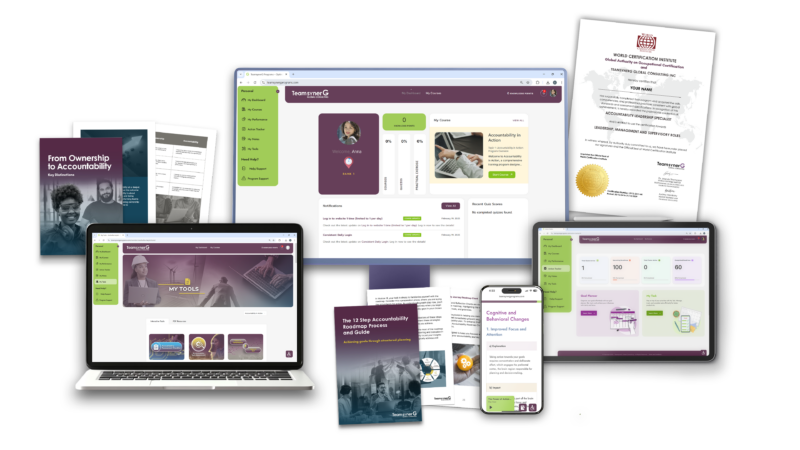
What You’ll Be Capable Of After This Certification:
Leading a team of proactive contributors who take action without waiting for direction
Communicating with precision, even in the most difficult or high-stakes conversations
Advancing projects without the constant burden of follow-up, checking, or micromanaging
Building a work culture grounded in trust, transparency, and shared accountability
Energizing your team by connecting their work to meaning, purpose, and organizational impact
Accelerating decision-making, reducing bottlenecks, and strengthening workflow efficiency
Achieving consistent execution commitments delivered reliably, not negotiated
Increasing operational discipline across your area of responsibility
Subscribe

Subscribe to Receive our Latest Industry Insights From Our Experts
Search
Corporate Training





Recent Articles



Assumptions are like mental fast food, convenient now and regretful later.
When I look at the specific moments in my own life that I regret the most, tis when I found out that what I believed was wrong. It is never the actual mistake that bothers me. It is the moment I realized I acted on something that was never true to begin with.
I have coached many people in my life, including people in the final year of theirs. Those conversations changed me. These were people who were out of time, who knew exactly what mattered, and what they wanted most in their last months was not more accomplishments, it was the strength to let go of pride and finally say, “I am sorry, ” as their assumptions they made cost them years of connection, love, and peace. It is so sad how many people would rather be right and go to their grave holding onto a belief that was never even true.
If we ask ourselves to look back at the last thirty days, how many times did you assume something about a person or a situation, reacted to that assumption, and then discovered it was false?
Assumptions in the context of behavior patterns, time management, forecasting, science, and geology, assumptions are necessary. They are grounded in data and evidence and are educated projections rooted in reality.
The assumptions we make in our everyday thinking about people, places and things, that are based on emotion, fear, bias, and unverified stories, event when they feel real, familiar and justified are the most destructive.
Nothing creates more damage in our relationships than the assumptions we never challenged. These thoughts in our head that we listen to on repeat, validate, rehearse and then call them facts is our comfort zone dressed up pretending it has a PHD.
Comfort zones are built from predictions, interpretations, past experiences, and unchallenged beliefs. Which are all ASSUMPTIONS.
Assumptions keep you comfortable, so you do not have to be accountable. They validate you being right contributing to blame, deflection and justification. In the end, they backfire and only hurt you.
Assumptions require nothing from you, whereas accountability requires self-honesty, transparency, ownership, and courage.
So on Day 5 of this cognitive reset, we are going to take courageous actions that just may be the gift and miracle you give to yourself this holiday.
Step 1: Identify one assumption you have been treating as truth. What did you conclude without evidence?
Step 2: Ask yourself what action or conversation you avoided because of that assumption. This reveals the cost.
Step 3: Ask yourself, “Is this assumption grounded in evidence or emotion “You will know immediately.”
Step 4: Replace the assumption with an accountable action. One small step that moves you closer to the truth, not the story. Repeat this with everything in your ASSUMPTION FOLDER.
When you challenge the stories you created in fear, you uncover the life waiting for you in truth. This is your miracle.